

In this VietWheels blog we discuss how we expect Vietnam to see a significant transition to electric cars (EVs).
The following explains why more drivers are switching:
- The Vietnamese EV market is expected to increase at an annual rate of 18.88%, from its 2025 valuation of USD 3.12 billion to USD 7.41 billion by 2030.
- Government Support: EVs are more inexpensive because to policies like tax breaks, fee waivers, and reduced import duties. For example, EVs benefit from lower Special Consumption Tax rates and a 100% registration cost exemption until 2027.
- Lower Costs: EV prices have decreased due to advancements in battery technology and local production, and long-term costs are lowered by cheaper electricity and less maintenance.
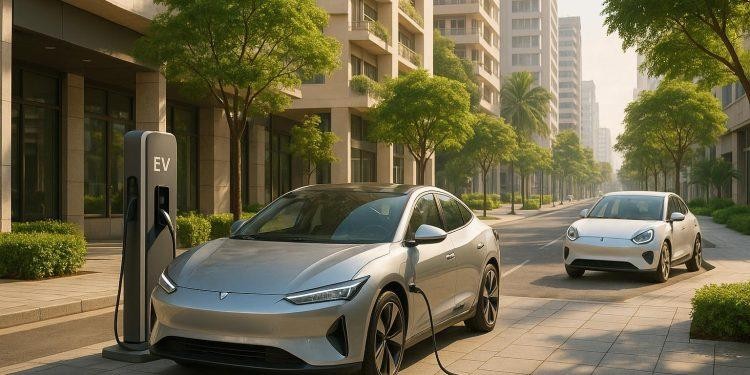
- Fast-charging networks are already widely available in cities like Hanoi and Ho Chi Minh City, resolving range issues for both long-distance and urban travel.
- Consumer Demand: Drivers are gravitating towards more economical and environmentally friendly solutions due to rising gasoline prices (around $6/gallon) and increased awareness of air quality problems.
Vietnam has demonstrated a strong commitment to cleaner transportation and a change in consumer expectations by aiming to have one million EVs on the road by 2030.
Growth in Consumer Interest in Clean Transportation in Vietnam
Vietnam's industry is being driven by customer demand due to growing infrastructure and technological improvements. The trend towards electric cars (EVs) is being driven by drivers who are placing a higher priority on cleaner air and lower fuel costs.
Fuel costs put a heavy burden on household finances in Ho Chi Minh City, where the average monthly salary is about $400 and gas prices are about $6 per gallon. In a nation where the average salary is only $400 per month, gas rates in HCMC are higher than what New Yorkers would spend, as explained by Brandon Quach of Scholar Travel Stipend. Therefore, the passionate shift away from gasoline is understandable.
Vietnam’s Technological Developments in Batteries
Many of the issues with EVs have been resolved by recent advancements in lithium iron phosphate (LFP) battery systems. Concerns over durability and range are allayed by the fact that these batteries are designed to function effectively in Vietnam's tropical climate. EVs can now withstand longer trips without frequent stops for recharging as well as city commutes thanks to improved energy density and faster charging capabilities.
Vietnam’s Infrastructure for EV Charging Grows Quickly
The development of charging infrastructure is making electric cars (EVs) an even more sensible option as they become more reasonably priced in Vietnam. One of the main things pushing drivers to adopt EVs is the expanding number of charging stations across the country. Range anxiety is one of the main issues facing EV users, but a complete charging network is quickly taking shape thanks to a combination of government financing and private sector partnerships.
Drivers will have dependable charging choices for both daily commutes and long-distance travel thanks to this infrastructural boom. The network is being constructed where it is most required by carefully giving priority to regions with the highest demand. Additionally, this foundation opens the door for future cost savings and improvements in fast-charging technology.
Investment by the Government in Green Infrastructure
While manufacturing incentives are cutting production costs and promoting sustainable industry growth, tax and fee reductions make EVs more accessible for consumers. Decree No. 199/2025/ND-CP, for instance, lowers import taxes on fully knocked-down (CKD) parts and was issued in July 2025.
This directive helps big firms like VinFast and others cut expenses by allowing automakers to combine production totals for conventional and green vehicles. A major policy step forward in Vietnam's restructuring of the automotive sector is Decree 199/2025/ND-CP.
The order offers automakers a strong incentive to increase their investment in electric, hybrid, and alternative-fuel vehicles by lowering minimum production requirements through aggregation provisions and granting 0% import taxes on parts of green vehicles.
Eliminating tariffs dramatically lowers overall costs because 40–60% of Vietnam's automobile production costs come from imported components. This lowers the cost of EVs and promotes greater investments in regional manufacturing plants. These legislative actions are essential to Vietnam's plan to spearhead South-east Asia's EV adoption.
Vietnam’s EV Adoption Is Driven by Government Policie
By implementing tax breaks, fee waivers, and production incentives, the Vietnamese government has taken decisive action to increase the accessibility of electric cars (EVs). Because of these efforts, EVs are no longer considered luxury goods but rather useful, daily modes of transportation. This policy-driven strategy is paving the way for future expansion in line with changing consumer preferences and technological breakthroughs.
Tax reductions and waivers of registration fees
The government extended the 100% registration fee exemption for battery-powered EVs until February 28, 2027, by issuing Decree No. 51/2025/ND-CP in March 2025. A 50% registration charge that was scheduled to go into effect on March 1, 2025, might have delayed the adoption of EVs in the absence of this prolongation.
The 100% registration cost exemption for battery-powered electric vehicles (EVs) in Vietnam has been extended through 2027. The decision is expected to further encourage firms and consumers to make green transformations.
EVs are exempt from registration fees for three years under the revised policy, after which they receive a 50% savings for the next two years. On the other hand, full fees still apply to gasoline and diesel vehicles.
Additionally, EVs with up to nine seats are exempt from the Special Consumption Tax (SCT), which is currently at 3% until February 28, 2027, at which point it will increase to 11%. Compared to the 35% to 150% SCT rates used for conventional automobiles, this is still a substantial decrease.
Furthermore, favourable rates for alternative fuel vehicles are introduced by the 2025 Special Consumption Tax Law: biofuel vehicles are taxed at 50%, while hybrid vehicles are taxed at 70% of petrol vehicle rates. Manufacturers benefit from import tax concessions on specialised machinery and materials used in sustainable energy vehicle initiatives.
Large-City Fast-Charging Networks
We expect that there will be an increasing number of fast-charging stations in cities like Hanoi, Ho Chi Minh City, and other major cities. Smart grid and energy storage technologies are being integrated to accommodate the growing demand for EVs, and both public and private investments are driving this expansion.
EV charging is becoming commonplace thanks to conveniently placed charging stations, which may be found in office buildings, shopping centres, and residential neighbourhoods. Furthermore, large expenditures made along key highways guarantee smooth transit between cities, removing the worry of running out of charging stations in the middle of the trip.
Reliability is also ensured using smart grid technology, especially during periods of high consumption.
Vietnam’s Average EV Car Price Could Potentially Get Cheaper…
The cost of owning an electric vehicle (EV) has decreased dramatically in Vietnam because of a combination of technological breakthroughs and favourable government policy. Thanks to these advancements, EVs are now reliable and reasonably priced for daily usage. EVs are now a viable option for daily drivers due to significant advancements in both their performance and design.
Reduced Fees in Vietnam’s Charging Stations
In addition to increasing accessibility, Vietnam's growing network of charging stations lowers the cost of EV ownership. To reduce the cost of running an EV, the government has implemented favourable electricity tariffs for public charging stations, which are then passed on to customers.
Furthermore, EV ownership is becoming less expensive because to Battery-as-a-Service (BaaS) systems. These services provide access to the newest battery technology while lowering the initial purchase cost by enabling drivers to lease batteries independently of their cars. Because of this creative strategy, cost is changing and EVs are becoming a more appealing choice for a wider spectrum of buyers.
EV Ownership's Long-Term Cost Savings in Vietnam
Over time, there are definite financial benefits to electric automobiles. Because electricity is less expensive than gasoline and because of their simpler construction, they require less maintenance, they are less expensive to operate.
The agreement is further enhanced by government incentives. EVs are more cost-effective than conventional cars because of lower tax rates and exemptions from registration fees.
All these elements work together to make EVs seem like a wise financial decision in addition to being ecologically friendly. They contribute to cleaner, healthier urban environments while offering a means of protecting consumers from volatile fuel prices.
Conclusion: Vietnam Leads South-east Asia in EV Growth
Vietnam has been a leader in South-east Asia's EV transition because of a combination of progressive legislation, cutting-edge technology, and a quickly expanding infrastructure of charging stations. The transition to greener modes of transportation has been accelerated in large part by government programmes.
EVs are becoming more affordable and useful thanks to advancements in battery technology and domestic production. Many Vietnamese drivers now consider EVs to be a good option due to their greater driving ranges and cheaper prices.
Another revolutionary development has been the growth of charging networks. Because drivers can now rely on widely spaced charging stations for both everyday commutes and long-distance excursions, range anxiety is no longer a significant problem. The attractiveness is further enhanced by fast-charging choices and lower operational costs.
Beyond technology and infrastructure, public opinion has changed. EVs are now seen by many city dwellers as a wise, economical substitute for conventional automobiles in addition to being an environmentally friendly choice.
Xe oto cu – we hope you found this Vietwheels blog insightful to learn about the strong demand for EVs in Vietnam. For the latest news, trends and insights about car sales in Vietnam, please visit our News and Articles page.